What is the best game ever?
That is a question that often arises among discussions. Contenders often include the polished and graphically rich Read Dead Redemption 2, the story-rich Last Of Us, the clean adventurous games of Zelda, the massively popular Minecraft, classical and everlasting arcades like Tetris, or the challenging and beautiful Elden Ring.
The truth is, the aforementioned games and many more are very good titles, they could be considered masterpieces. It is, then, very hard to determine something such as the best game of all, because he criteria can be very different. When it comes to storytelling, one could argue that Mass Effect, The Last of Us, or the interactive titles from Quantic Dream take the first spot. When the criteria is global engagement, massive online multiplayer games such as Counter-Strike or Fortnite dominate. There are categories upon categories: indie gems, open worlds, shooters, simulation, and more.
However, in this opinion piece we name one game that has a bit of everything — and all of it done to a very high degree. A game that, despite turning fifteen in 2026, is still talked about, still played, and still the subject of passionate debates on forums like Reddit. A game still highly popular after all this time.
That game is The Elder Scrolls V: Skyrim, the 2011 role-playing game developed by Bethesda Game Studios.
What is the game about?
This game has it all — and everything complements everything else. The base game is single-player, but for lovers of multiplayer, The Elder Scrolls Online scratches that itch within the same universe. Not the same game, strictly speaking, but the franchise covers that ground.
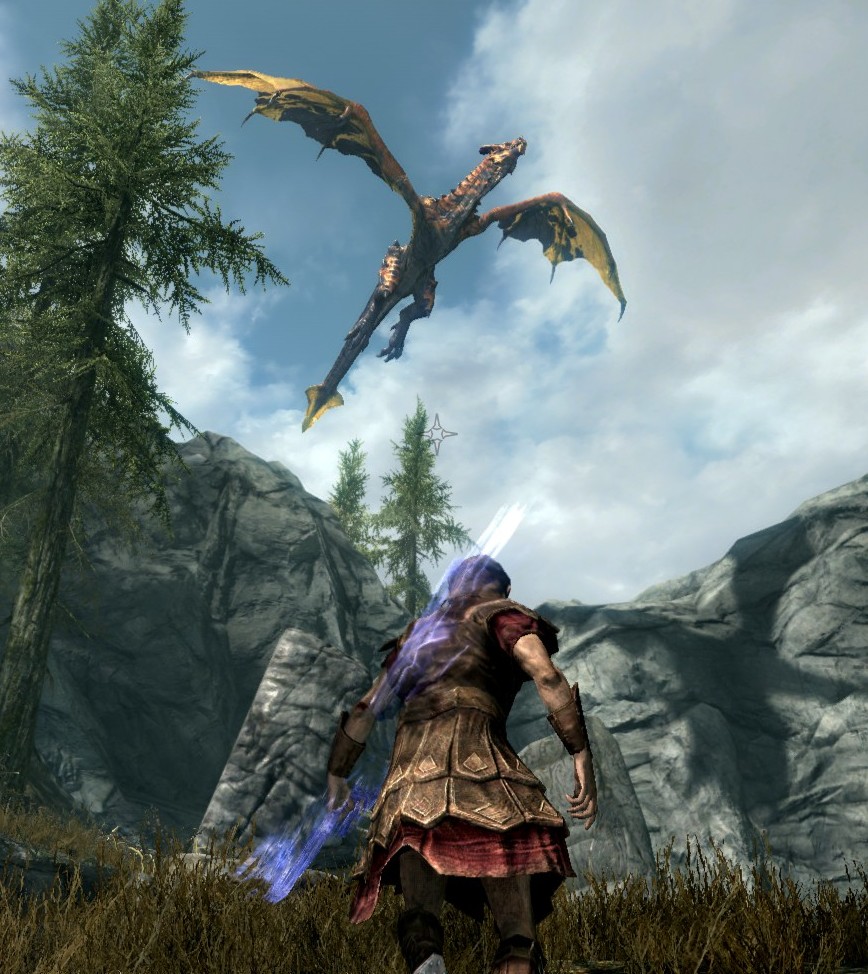
What is the game about, then? At its core: an open-world adventure set in the medieval-fantasy world of Tamriel, specifically the frozen northern region of Skyrim. Players choose a race for their character at the outset, and from there they move through a vast world searching for their place in it. There is a main story to follow — one that casts the player as the Dragonborn, a legendary figure destined to confront an escalating threat of dragons terrorising the realm. But that main story is almost beside the point. The real strength lies in the extraordinary density of side quests, hidden dungeons, faction storylines, and emergent moments that branch in every direction.
Why this, specifically, is the best game ever
Unlike watching a film passively, nothing in a game occurs until you make it occur. You press the button; the world responds. That interactivity is the soul of the medium, and the best games honour it by tailoring the experience to every individual player.
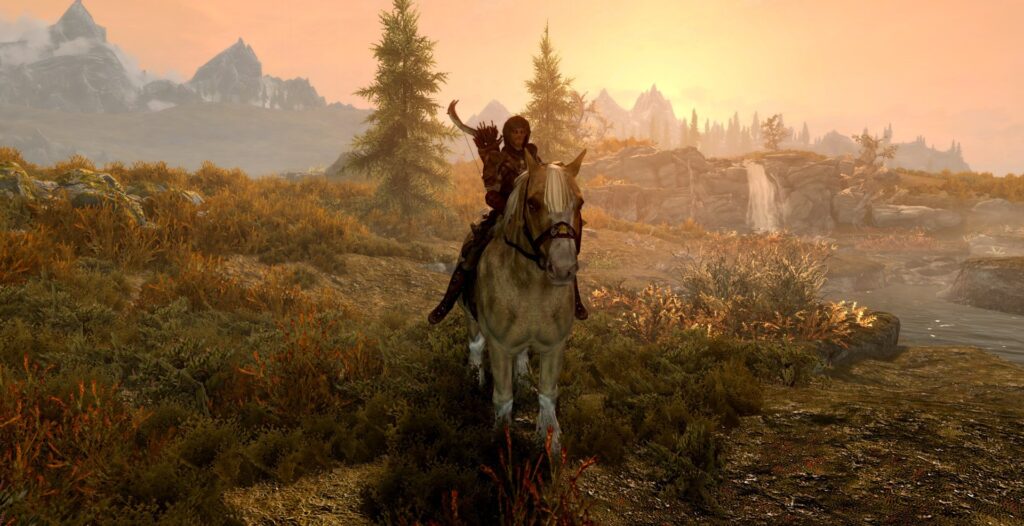
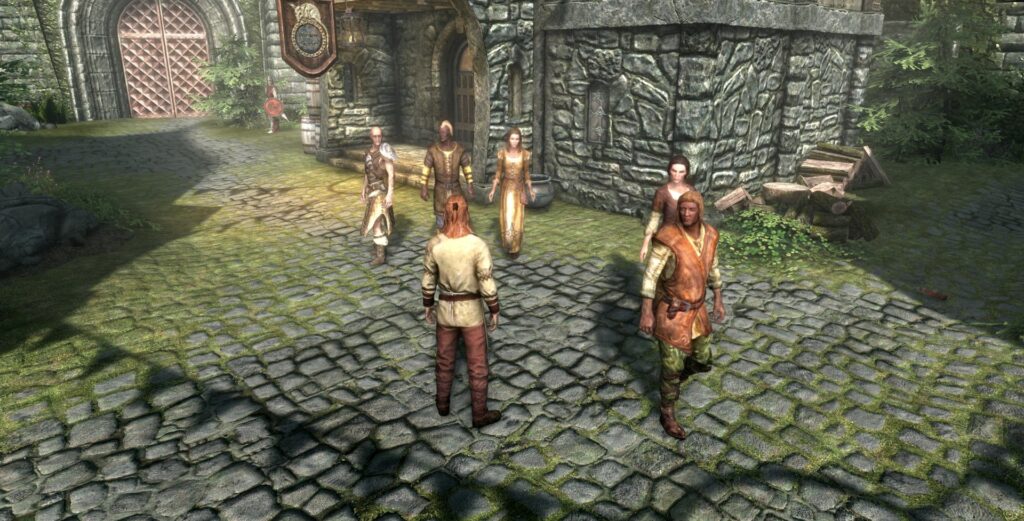
Based on that principle, Skyrim is the undisputable winner. Its open world is rich with NPCs who offer tasks, form relationships, and populate a living backdrop. But the real richness lies in the character you build. Over the course of the game you decide whether your hero is a morally upright warrior, a shadow-dwelling assassin, a self-interested thief who cares only for gold, or a devoted companion who completes quests alongside a spouse. In the player’s imagination, an entire personal lore takes shape, built from the choices they make.
“What sets games apart from other media is the interactive element — leaning forward rather than leaning back. You decide what happens. The experience is shaped by you.”
Of course, this argument about interactivity and freedom might seem to crown Minecraft instead. But here is the difference: Skyrim has it all, and all of it working together. It provides that same freedom to define your own experience — but it layers on top of that a rich and epic main story, an even richer secondary lore that rewards exploration, graphics that were impressive at launch and have since been remastered, and one of the most celebrated game soundtracks ever composed. Jeremy Soule’s score has been performed by national orchestras worldwide and has become an anthem for the entire genre of epic fantasy gaming.
The combat, while not as punishing as FromSoftware’s catalogue, is flexible and fun — accommodating mages, archers, and swordsmen alike, and serving the role-playing experience without ever getting in its way. First-person or third-person, it plays how you want it to.
Relevance in communities, the industry, and people’s inspirations
The accolades are staggering. According to Bethesda Softworks, Skyrim accumulated more than 200 perfect review scores worldwide and took home over two dozen Game of the Year awards from outlets including G4TV, Official Xbox Magazine, and others. It won Game of the Year at the 2011 Spike Video Game Awards and at the 2012 Game Developers Choice Awards — the latter being an honour voted on by the developers themselves, arguably the most meaningful endorsement of all. It also swept the Golden Joystick Awards that year, winning Ultimate Game of the Year, Best RPG, and Top Gaming Moment.
And crucially, it is still talked about. Not as a relic. As a game people load up today, in 2026, and lose dozens of hours in. That kind of lasting relevance is extraordinarily rare, and it is, in itself, the most powerful argument of all.
The legacy of Skyrim, and of its older sibling Oblivion, which was also a landmark title — has created an almost mythic anticipation for the next chapter. Fans have been waiting for The Elder Scrolls VI almost with the same patient, slightly anxious energy as Grand Theft Auto fans awaiting GTA VI. The bar has been set impossibly high by the games that came before it.
Bethesda: make it happen.